Thursday, July 31, 2014

Cyanide ( Chemical Contaminant)


         Cyanide is usually found as a chemical compound , and is naturally produced by some plants and fruits. Cyanide can be found within the environment through industrialization as well. When cyanide is found within the air , it is in the form of gas with the half-life of one to three years. Fortunately, when cyanide enters bodies of water, it does not move up the food chain. Cyanide can also be found within the soil , and van be removed through several processes. Although the contaminant can become harmful to organisms within the soil. Individuals may be exposed to the contaminant through  eating food with cyanide, drinking contaminated water  , smoking cigarettes , or breathing in contaminated air in an industrial environment.

     Although small amount are found naturally in some food, it is not enough to cause harm to the body. If individuals are exposed to the chemical contaminant for a long period of time it may cause damage to the individuals brain or heart, and could potentially lead to a coma or even death in sever cases. Those who have been exposed to cyanide for long periods of time may suffer from heavy breathing, shortness of breath, and convulsions . Cyanide has a more rapid effect when consumed rather than being exposed through the skin. Those who are exposed to cyanide through touching contaminated  soil may experience sores . Children who have been exposed to high level of cyanide may experience low blood pressure, head aches, coma, and even death in severe cases. Although the contaminant does not cause birth effects, pregnant woman who consume Casanova fruits and roots may have children born with thyroid disease.
     Individuals may be tested for cyanide through several test . Poisoning may be prevented through staying away from industrial areas which contaminate the air and environment with cyanide compounds , and reducing the risk of second-hand smoke exposure.

Sources
  http://www.atsdr.cdc.gov/tfacts8.pdf

Ebola Virus


         The Ebola virus is one of the deadliest viruses known to man. The virus has also recently made an unexpected return affecting individuals living and working in Guinea, Liberia, and Sierra Leone. Sources in Guinea have confirmed that the Ebola Virus is an epidemic , while there are two suspected cases within Sierra Leone , and five confirmed dead from the virus within Liberia. 

       The virus was first identified in 1976 in the DR Congo. The virus has not only been found in humans but in gorillas, chimpanzees, antelope, and porcupines as well. There are 3 known species of the deadly virus . Fruit bats are the known host of the virus . Those who have been exposed to the virus may experience symptoms of weakness, head ache, sore throat, vomiting, onset fever, muscle pains, and impaired kidney and liver bleeding . Individuals may come into contact with the virus by way of infected feces, blood, or bodily fluids. Individuals may also be exposed by handling the infected decease population. The estimated incubation period of the virus is about 2 to 21 days (WHO, 2013). 

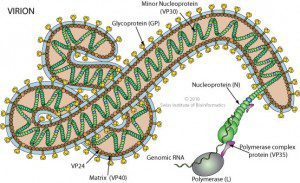
The life cycle of the Ebola virus is depicted below
 . Graphic showing the life cycle of the ebolavirus.

The virus has a fatality rate of 90% , and usually effect remote villages within Central and West Africa. There are currently no vaccinations for the Ebola virus, although there are some which are currently being tested. There is also no specified treatment for the virus other than keeping the infected patient hydrated . Since there are no vaccinations for the virus , to prevent it animal farms and housing should be kept clean . If an outbreak is suspected , potentially infected persons and animals should be quarantined to ensure that it does not continue to spread. 

Sources 
 http://www.cdc.gov/vhf/ebola/resources/virus-ecology.html 
http://www.who.int/mediacentre/factsheets/fs103/en/ 

Saturday, July 26, 2014

Hookworm (Parasite)


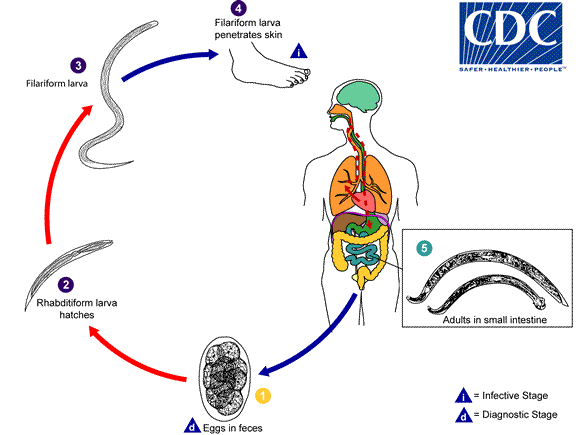
    Although this parasite isn't my favorite, being that none are, it is quite interesting to say the least. The hook worm affects about 740 million people world wide according to the Centers for Disease Control and Prevention (CDC,2013). These particular parasites are small worms which attach themselves to the wall of the bowel , and may cause serious health concerns in humans. The parasite lives within the small intestines and passes its eggs through the feces of the infected individual . The hook worm is contracted through contaminated water or food items.Life cycle of hookworm

      Being that the eggs are passed through an infected individuals feces , the larvae become flariform within 5- 10 days . The larvae are able to survive in unfavorable conditions for up to 3 weeks according to the CDC (CDC, 2013). When infecting the host , the parasite  enter through the skin and are carried through the body by way of blood vessels. The larvae then make their way to the intestines where they have then matured into adult larvae. According to the CDC, most adult worms are eliminated within 1-2 years (CDC, 2013) . 

     Hook worms can be found in rural areas where sanitation is poor . Those who are infected with hook worms may experience symptoms which may cause heartache, dizziness, fatigue, a pale appearance, and dryness in the hair and skin. Those who contract the hook worm usually become anemic , and suffer from a low red blood count , which could potentially lead to heart failure in some individuals. Individuals infected are also at risk for developing ascites , which is a condition that causes fluid to build up around the abdominal area, as well as a significant protein loss. 

      Although medication is prescribed to treat the hook worms , physicians concentrate on improving the nutrition of the infected individual. Prescriptions which kill the parasite such as abendazole, and mebendazole may also be prescribed by physicians to treat the hook worms. To ensure that hook worms are not contracted through feces or the soil, individuals should be sure to wear shoes while outdoors , or in areas where the sanitation methods are poor. 

http://www.healthline.com/health/hookworm#Prevention8
http://www.cdc.gov/parasites/Hookworm/  


Sunday, July 20, 2014

Rachel Carson Responsible for Deaths of Millions of African Children


       Although Rachel Carson had a significant impact on the awareness of the harsh chemicals being placed in the environment, was she also the cause of the deaths of millions of African children? Her persistent actions and research lead to the modern environmental movement which suggested the cessation of the use of pesticides, especially DDT which had the potential to quickly move up the food chain and harm animals , and eventually humans who consumed the animals existing in the environmental. Carson's goal of awareness was reached through her publication of "Silent Spring" , which lead to he development of the Environmental Protection Agency (EPA), as well as the banning of the use of the pesticides within the United States. Although DDT was not banned globally it later spread to other nations.
       Granted that DDT did stay in the environment when used as a pesticide, and it did move up the food chain , eventually causing cancer, and numerous deaths , the product was very effective in Africa against mosquitoes which carried malaria. Many of the huts used by African tribes were also sprayed with DDT to ensure complete protection from destructive disease, and without it being used because of its harmful effects, over 1 million individuals die annually (Swartz, 2007). Critics often believed that Carsons' drastic arguments should be forgotten to save the lives of many suffering and who could potentially suffer from malaria (Swartz, 2007). Many novelist , quoted time after time , " Banning DDT killed more people than Hitler" .
         Though it could seem somewhat true that other nations and countries were jumping on board and banning DDT to stop its elevation in the food chain, what many critic fail to realize is that many of the mosquitoes were growing a resistance to the chemical , and other specific chemicals being used , causing million of children to suffer and die from malaria. DDT was heavily used in countries similar to Africa because it was affordable and easy to use, unlike other methods such as bed nets , and ACT, which are  a lot more effective than DDT.

Sources:
 http://fair.org/extra-online-articles/rachel-carson-mass-murderer/

Rachel Carson's Contribution to Environmental Health

 
Rachel Carson (1907-1964)
     
      Rachel Carson was seen as the "backbone" to environmental health due to her numerous contributions . Carson was seen as the cause of why the Environmental Protection Agency (EPA) became conscious and aware of the many environmental hazards that existed in the water and air quality, as well as pesticides. Carson's book, "Silent Spring" , which was written over 50 years ago , influenced the environmental movement to become informed on the nature of the chemicals being placed in the environment and the effects they have on animals, humans, and vegetation. Carson especially pressed the issue of dichloro-diphenyl-trichloroethan (DDT). Within Silent Spring Carson expressed the need to eliminate the use of DDT's within the environment due to their ability to climb the food chain , which in the end affected the children and adults who live off the land (animals and vegetation) . Carson expressed the issue that if mankind continues to poison the environment , the environment will then poison mankind: " Our heedless and destructive acts enter into vast cycles of the earth and in time return to bring hazard to ourselves" . 

      Although Carson made the damage being done to the environment known to not only the thousands of readers of Silent Spring , but to government officials , the issues addressed still persist today. Carson made countless efforts to ensure that individuals were aware of the harm being done to the food chain , yet issues still exist today, how many more deaths will occur before eminent action is taken to rid the environment of chemicals , and have industries and the government own up to the damaged caused by them? Although she was strong willed and persistent in her work and research , her actions alone are not enough to end the constant destruction being done to the environment annually . 


Sources: http://usatoday30.usatoday.com
http://www.paleycenter.org/away-we-go-green-silent-spring/ 

Tuesday, July 15, 2014

Blog # 2

Choropleth Map


      Choropleth maps are used when data is categorized into counties , countries, or provinces, when data is standardized to show rates, as well as if there is a continuous statistical surface. These form o maps use differences in shading, coloring, or the placement of symbols in predefined areas to indicate the values in those particular areas. Choropleth maps are also used to group data into 2 or more levels or classes using slicing values . Although choropleth maps are commonly used they make it easy for data to be slanted , maps like such also create the illusion of rapid breaks whereas data varies continuously and gradually in the real world. Choropleth maps also allow small areas to overwhelm the data of large regions. 

Isarithmic Map 


         Isarithmic maps depict continuous and smooth phenomenons , a common example are weather maps as shown above. Isometric maps uses isolines, which are lines that connect equal values to illustrate continuous data such a elevation, air pressure, and precipitation. Data issues with isarithmic  maps is that data is derived from point data which can take two forms; true and conceptual. With true point data, points exist where measurements were taken . With conceptual point data, points exist at the centroids of enumeration units. Isometric maps can represent raw or standardized data .

Dot Density Maps


       Dot density maps are effective ways to show density differences in geographic distributions across a landscape.  Dot density maps are also easy to understand, requiring little cognitive effort by the map reader when compared to isoline maps. However, retrieval of specific information from dot density maps is difficult, as map users find manual counting of dots tedious and tend to underestimate dot totals as density increases. There are two kinds of dot density maps: one-to-one maps and one-to-many maps. For one-to-one dot density maps, each point on the map corresponds to a single incidence of the mapped phenomenon. One-to-one dot density maps are general-reference maps, symbolizing spatial location only. Because of this, care should be taken to ensure that the dot is accurately located on the map.


Proportional Symbol Map 
         Proportional symbol map scale the size of simple symbols , which are usually a circular or a square shape. These forms of maps are usually easy to grasp , the larger the symbol or shape is the more that particular item exist in that particular area. These forms of maps are very flexible , and easier for individuals to extract the numerical data. 


Environmental Sensitivity Index Maps 

      These forms of maps provide a summary of coastal resources that are at risk if environmental disasters occur such as oil spills. When disasters like these take place these forms of maps assist responders in reducing the environmental consequences of the disaster and the clean-up efforts. These forms of maps can also be used to plan for disasters in vulnerable and more susceptible locations. By utilizing these maps as a preventive measure , users are able to identify possible disaster locations, wild-life and humans who may be affected and need to be protected , and strategies for how they can be fixed. 


Sunday, June 29, 2014

What's Really in your Meal?

What’s Really in your Fish                                                                            

Polychlorinated biphenyls (PCB) Fact-sheet for your health
 
Frequently asked Questions
1.      What are PCBs?
Polychlorinated biphenyls commonly known as PCBs are chemicals which can be used in making plastics, pesticides, as a coolant for insullation , as a lubricator for machinery, as an ingredient in paints , glues, inks ,and caulking, and etc. 

2.      How and Why are the PCBs found in my food sources?
Often times the population at hand comes into contact with PCBs by way of landfills leaching into a water supply, or by industries filtrating chemicals into water sources. Once PCBs have contaminated a water source they aren't dissolved and end up concentrating in the food-chain in that environment which is often animals that habitat the water supply and feed on PCB- contaminated sediments. Many individuals obtain fish from these contaminated waterways, and consume them not knowing that a significant amount of PCBs are located within the fatty tissue of the fish. PCBs are colorless and odorless, which is why they often go unnoticed in an individual’s system. 

3.      How are PCBs harmful to my family?
Those who frequent contaminated water sources , and utilize them as a source for drinking and consumption over an elongated period of time may experience changes within their immune system, skin , reproductive system, nervous system, and thymus glands. Individuals may also have a much higher risk at developing various cancers, and liver disorders. Those who are pregnant or nursing could also experience lowered birth weights, birth defects, or developmental problems in their child. The PCBs may enter into the body by way of the intestinal tract, the lungs, or skin.
 
      
4. How can you protect your family from these harmful chemicals ?
If individuals must use the contaminated water ways as a source for food proper cleaning guidelines must be followed correctly to ensure that you and your family’s health is not compromised. To reduce the risk of ingesting high levels of PCB all internal organs within the fish should be discarded, as well as the head and tail of the fish. Under no circumstances should fish from contaminated water ways be consumed raw, the fish should instead be broiled, grilled, or baked so that the fat can be cooked off and discarded. Before consumption the fish should be thoroughly cleaned and fat from the stomach of the fish should be cut, as well as fat along the backbone, and lateral line on each side of the fish. In addition the skin of the fish should not be consumed, and should be removed before cooking.