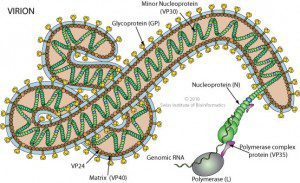
The Ebola virus is one of the deadliest viruses known to man. The virus has also recently made an unexpected return affecting individuals living and working in Guinea, Liberia, and Sierra Leone. Sources in Guinea have confirmed that the Ebola Virus is an epidemic , while there are two suspected cases within Sierra Leone , and five confirmed dead from the virus within Liberia.

The virus was first identified in 1976 in the DR Congo. The virus has not only been found in humans but in gorillas, chimpanzees, antelope, and porcupines as well. There are 3 known species of the deadly virus . Fruit bats are the known host of the virus . Those who have been exposed to the virus may experience symptoms of weakness, head ache, sore throat, vomiting, onset fever, muscle pains, and impaired kidney and liver bleeding . Individuals may come into contact with the virus by way of infected feces, blood, or bodily fluids. Individuals may also be exposed by handling the infected decease population. The estimated incubation period of the virus is about 2 to 21 days (WHO, 2013).
The life cycle of the Ebola virus is depicted below
. 
The virus has a fatality rate of 90% , and usually effect remote villages within Central and West Africa. There are currently no vaccinations for the Ebola virus, although there are some which are currently being tested. There is also no specified treatment for the virus other than keeping the infected patient hydrated . Since there are no vaccinations for the virus , to prevent it animal farms and housing should be kept clean . If an outbreak is suspected , potentially infected persons and animals should be quarantined to ensure that it does not continue to spread.
Sources
http://www.cdc.gov/vhf/ebola/resources/virus-ecology.html
http://www.who.int/mediacentre/factsheets/fs103/en/

No comments:
Post a Comment